Director, writer, producer and actor · Telugu cinema
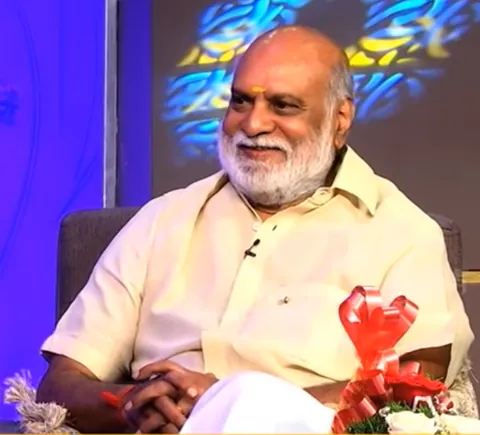
K. Raghavendra Rao
K. Raghavendra Rao movies: 84 Telugu films on file (79 as director, 39 as writer, 5 as producer, 1 as actor), 1975–2024. Earliest on file: Babu (1975). Latest release: Sarkaaru Noukari (1 January 2024).
- Films on file
- 84 (79 as director, 39 as writer, 5 as producer, 1 as actor)
- Years on file
- 1975–2024
- Born
- 23 May 1942 · May birthdays (Wikidata)
- Selected films on file
- Rajakumarudu, Shirdi Sai, Student No.1
- Record
- Q6434855 on Wikidata
K. Raghavendra Rao (born Kovelamudi Raghavendra Rao, 23 May 1942) is an Indian film director, screenwriter, choreographer and producer who works mainly in Telugu cinema, with a few Hindi and Kannada films. In a career of more than four decades he has directed over a hundred films across romance, comedy, fantasy, melodrama, action and devotional biography, and has won a National Film Award, ten Nandi Awards and five Filmfare Awards South.
Family
Raghavendra Rao is the son of the veteran director K. S. Prakash Rao and Koteswaramma, and the father of the actor-turned-filmmaker Prakash Kovelamudi. From 2015 to 2019 he was an executive member of the Tirumala Tirupati Devasthanams Board.
Commercial hits
He won the Filmfare Award for Best Director – Telugu for Prema Lekhalu (1977), and the Nandi Award for Best Director for Bobbili Brahmanna (1984). His social drama Agni Putrudu (1987) and the romantic action film Aakhari Poratam (1988) were shown in the mainstream section at IFFI. The fantasy Jagadeka Veerudu Athiloka Sundari (1990) brought another Filmfare award. Gharana Mogudu (1992) became the first Telugu film to gross over ₹10 crore, according to the source, and the romance Allari Priyudu (1993) was an instant hit that won him both the Nandi and Filmfare awards for direction. Pelli Sandadi (1996) won him Nandi Awards for Best Director and Best Choreographer.
Devotional films
Raghavendra Rao is known for films about saints and devotees. Annamayya (1997) won two National Film Awards, was shown at the 29th IFFI and brought him the Nandi and Filmfare awards for Best Director. He followed it with Sri Manjunatha (2001), Sri Ramadasu (2006), Shirdi Sai (2012) and Om Namo Venkatesaya (2017), which received several state honours.
Producer and television
He produced Bommalata, which won the National Film Award for Best Feature Film in Telugu at the 53rd National Film Awards. His television credits include the serials Santhi Nivasam (2002), Agnisakshi (2017) and Krishna Tulasi (2021).
Honours
His lifetime honours include the Filmfare Lifetime Achievement Award (2002), the B. N. Reddy National Award (2009), the SIIMA Lifetime Achievement Award (2014), the NTR National Award (2015) and the IIFA award for outstanding contribution to Indian cinema (2017).
Career on file
K. Raghavendra Rao has 84 Telugu films on file at Tollywood Desk, dated from 1975 to 2024: 79 films as director, 39 films as writer, five films as producer and one film as actor. The earliest of them is Babu (1975), and the most recent release is Sarkaaru Noukari (2024). The most widely covered of these, counted by Wikipedia language editions, are Rajakumarudu (1999), Shirdi Sai (2012) and Student No.1 (2001). Other recent releases on file are Pelli SandaD (2021), Om Namo Venkatesaya (2017) and Jhummandi Naadam (2010).
In the films K. Raghavendra Rao directed, Kaikala Satyanarayana appears most often (33 films), ahead of Brahmanandam (29) and Allu Rama Lingaiah (19). Music on 32 of them is by K. Chakravarthy, with M. M. Keeravani (23) and K. V. Mahadevan (6) next. Vyjayanthi Movies produced six of them, more than any other banner on file. Across these films the credits on file name 5 different directors, 17 music directors and 148 other credited actors.
Runtime is on file for 54 of them; they average 145 minutes, and the longest is Allari Bullodu at 175 minutes. Four of them have a streaming (OTT) release noted on the site. By decade the list splits into 1970s (10), 1980s (33), 1990s (25), 2000s (11), 2010s (3) and 2020s (2). 1981 is the busiest single year, with six films.
Figures come from the films on file at Tollywood Desk and change as records are added.