Director, writer, actor and music director · Telugu cinema
Singeetam Srinivasa Rao
Singeetam Srinivasa Rao movies: 22 Telugu films on file (18 as director, 18 as writer, 3 as actor, 1 as music director), 1972–2026. Earliest on file: Neeti-Nijayiti (1972). Latest release: Sing Geetham (12 June 2026).
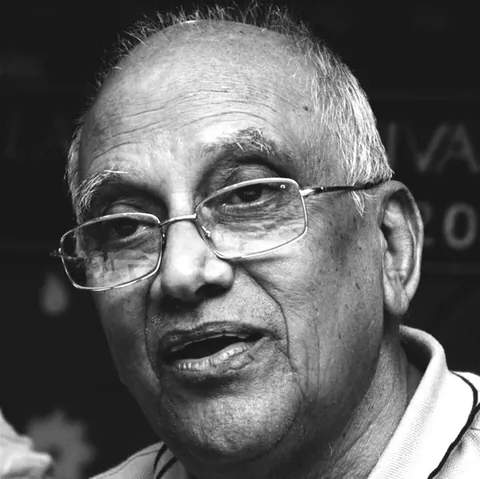
- Films on file
- 22 (18 as director, 18 as writer, 3 as actor, 1 as music director)
- Years on file
- 1972–2026
- Born
- 21 September 1931 · September birthdays (Wikidata)
- Died
- 3 October 2026
- Selected films on file
- Varudu, Akasa Veedhilo, Aditya 369
- Record
- Q3495195 on Wikidata
Profile update, 6 October 2026: Srinivasa Rao died in Chennai on 3 October 2026, according to The Indian Express and The Times of India. The career information below is retained; this update corrects his current status and distinguishes Sing Geetham’s cinema and streaming dates.
Singeetam Srinivasa Rao (born 21 September 1931) was an Indian film director, screenwriter, producer, composer and actor, widely regarded as one of India’s most versatile and innovative filmmakers. He has directed around sixty films in Telugu, Kannada, Tamil, Hindi and English, and is credited with changing South Indian cinema through his experiments. His honours include two National Film Awards, five Nandi Awards, three Karnataka State Film Awards, three Filmfare Awards South and the Film Federation of India’s Life Achievement Award (2011). His Telugu classics include Mayuri (1985), Aditya 369 (1991) and Bhairava Dweepam (1994).
Early life
Srinivasa Rao was born in Gudur, in the then Nellore district of Andhra Pradesh. His father, Ramachandra Rao, was a headmaster and his mother, Sakunthala Bai, a violinist. He graduated in physics from Presidency College, Chennai, where he acted in plays under Harindranath Chattopadhyay. Unable at first to meet his idol, the director K. V. Reddy, he worked as a teacher in Sullurupeta and as a journalist, and wrote award-winning experimental plays.
Apprenticeship with K. V. Reddy
When he finally met K. V. Reddy in 1954, the director asked him to write a script based on The Monkey’s Paw; impressed by the result, he took him on as an apprentice. Srinivasa Rao rose to associate director and worked on all of Reddy’s films from Donga Ramudu (1955) to Uma Chandi Gowri Sankarula Katha (1968), including Mayabazar (1957) and Jagadeka Veeruni Katha (1961).
Telugu films
His debut as director, the offbeat Neethi Nijayithi (1972), was acclaimed but not a commercial success. The social drama Tharam Marindi (1977) won the Nandi Award for Best Feature Film, and the Tamil Dikkatra Parvathi (1974) won a National Film Award. Other Telugu successes include Panthulamma (1978) and Mayuri (1985), which won a record 14 Nandi Awards. With Nandamuri Balakrishna he made the science-fiction film Aditya 369, the fantasy Bhairava Dweepam, which won him the Nandi Award for Best Director, and the mythological Sri Krishnarjuna Vijayam (1996); the first two are regarded as landmarks of their genres in Telugu. He also directed Brundavanam (1992), which won him a Nandi for screenplay, and Madam (1994). His Telugu film Welcome Obama (2013) dealt with commercial surrogacy.
Kannada and Tamil
In Kannada he directed seven films with Rajkumar, beginning with the blockbuster Haalu Jenu (1982) and including Rajkumar’s 200th film, Devatha Manushya (1988); he also launched Rajkumar’s sons Shiva Rajkumar and Raghavendra Rajkumar and composed music for two films. With Kamal Haasan he made films including Raja Paarvai (1981), Kamal Haasan’s 100th film, the dialogue-free Pushpaka Vimana (1987), which won the National Film Award for Best Popular Film, Apoorva Sagodharargal and Michael Madana Kama Rajan.
Later years
In 2026 he directed the musical fantasy Sing Geetham, produced by Nag Ashwin with music by Devi Sri Prasad. Its cinema release was 12 June 2026; the reported India Netflix premiere was 8 July, a separate milestone. See the verified viewing guide for the platform listing and dated release reports.
In his August 2026 interview with The Hollywood Reporter India, Rao explained the film’s use of sung dialogue and described directing through a virtual setup at his Chennai home. This is an attributed account, not an interview conducted by TollywoodDesk.
Sources: the Wikipedia article on Singeetam Srinivasa Rao; Wikidata; the interview and listings linked above.
Career on file
Singeetam Srinivasa Rao has 22 Telugu films on file at Tollywood Desk, dated from 1972 to 2026: 18 films as director, 18 films as writer, three films as actor and one film as music director. The earliest of them is Neeti-Nijayiti (1972), and the most recent release is Sing Geetham (2026). The most widely covered of these, counted by Wikipedia language editions, are Varudu (2010), Akasa Veedhilo (2001) and Aditya 369 (1991). Other recent releases on file are Bhale Unnade (2024), Pratibimbalu (2022) and Kanche (2015).
In the films Singeetam Srinivasa Rao directed, Gummadi Venkateswara Rao appears most often (four films), ahead of Nandamuri Balakrishna (3) and Rajendra Prasad (3). Music on four of them is by Madhavapeddi Suresh, with G. K. Venkatesh (2) and K. Chakravarthy (2) next. Chandamama Vijaya Combines produced three of them, more than any other banner on file. Across these films the credits on file name 6 different directors, 14 music directors and 64 other credited actors.
Runtime is on file for 15 of them; they average 141 minutes, and the longest is Bhairava Dweepam at 162 minutes. Five of them have a streaming (OTT) release noted on the site. By decade the list splits into 1970s (5), 1980s (3), 1990s (5), 2000s (2), 2010s (4) and 2020s (3).
Figures come from the films on file at Tollywood Desk and change as records are added.